
- 8556 120 Street, Surrey, BC.
- +12368082270
- 8556 120 Street, Surrey, BC, Canada
- info@thesuccessnavigators.ca
- +1-604-399-5300

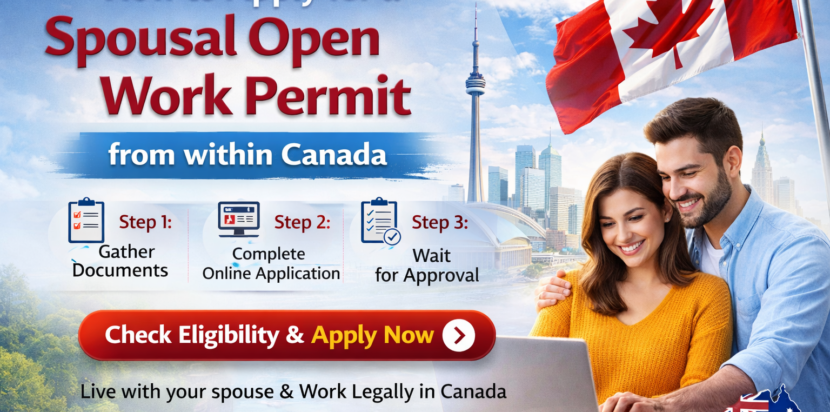
A spousal open work permit allows the spouse or common-law partner of certain temporary residents in Canada to work for any employer. This permit is an important tool for families who want to stay together while one partner studies or works in Canada. It offers flexibility and can help increase household income. Many couples look to this option to support each other and contribute to the Canadian economy.
Applying for a spousal open work permit from within Canada provides certain advantages. If the applicant is already in Canada, they often have more control over the process. They can gather necessary documents and respond to requests more quickly. Staying in Canada during the process can help families avoid separation while the application is being processed.
Not all spouses or partners qualify for the open work permit. The main requirement is that the applicant’s spouse or partner holds a valid study or work permit in Canada. Couples who are applying for permanent residence under the inland spousal sponsorship program may also qualify. Each applicant must provide proof of a genuine relationship and meet other eligibility criteria. Abc
The following table outlines basic eligibility:
| Eligible Situation | Example |
|---|---|
| Spouse of skilled worker with valid work permit | Tech worker’s spouse |
| Spouse of full-time international student | Student’s spouse |
| Spouse being sponsored for inland PR | PR sponsorship in Canada |
Understanding these basics is the first step to a successful application process.
To qualify for a spousal open work permit from within Canada, you must be married to or in a common-law partnership with a Canadian citizen or permanent resident. Your partner must be living in Canada or planning to live there while your application is processed. You and your spouse or partner must provide proof of your relationship, such as a marriage certificate or evidence of cohabitation. Applicants must also have valid temporary resident status in Canada. This can include visitor, student, or worker status. Applying from within the country means you are physically present in Canada at the time of your application submission.
You must show that your relationship is genuine and not entered into primarily for immigration purposes. Providing supporting documents like joint bank account statements, shared bills, photos, and correspondence can help establish this. Your spouse or common-law partner must also meet certain conditions. If you are applying under the inland sponsorship stream, your partner must submit a sponsorship application on your behalf, and it must be accepted for processing by Immigration, Refugees and Citizenship Canada (IRCC).
You are not eligible if you have been found inadmissible to Canada. This includes reasons such as criminality, misrepresentation, or certain medical issues. You cannot apply if you have failed to comply with a previous removal order or have an unresolved refugee claim. It’s important to review your status and consult the specific criteria set by IRCC.
| Criterion | Requirement |
|---|---|
| Relationship status | Legally married or common-law partnership |
| Partner’s status in Canada | Citizen or permanent resident |
| Applicant’s status in Canada | Valid temporary resident status |
| Genuine relationship evidence | Required |
| Sponsorship application (inland) | Must be submitted and accepted for processing |
| Admissibility | No criminal, medical, or immigration issues |
Before starting the application for a spousal open work permit from within Canada, you must gather all required documents. It is important to prepare photocopies or scans of each document in advance. This will help you avoid unnecessary delays during the online application process. The main applicant and the sponsoring spouse will each need to provide different supporting papers.
The applicant must have a valid passport, proof of status in Canada, and their marriage certificate. Additional items such as previous work or study permits may also be required. The spouse or partner must submit proof of Canadian citizenship or permanent resident status, along with documents showing the ongoing relationship.
Organizing your documents into a checklist is helpful. Below is a sample table to guide you:
| Document | Who Provides | Purpose |
|---|---|---|
| Valid passport | Applicant | Identity, travel, and legal status |
| Marriage certificate | Both | Proof of relationship |
| Status in Canada | Applicant | Eligibility to apply from within Canada |
| Proof of sponsor status | Spouse | Shows sponsor is a citizen/PR |
| Photos (as per specs) | Both | Required for permit |
| Previous permits | Applicant | Work or study history |
| Relationship evidence | Both | Confirms ongoing relationship |
Check each requirement and ensure all documents are up to date. Mismatched or expired documents may cause application issues.
Scan each document clearly in color and save it as a PDF or JPEG. File sizes must meet IRCC upload limits. Name each file according to its content for quick reference.
Double-check that all scans are legible and complete before uploading. IRCC may return the application if documents are unclear or missing information. Organize files in a folder on your computer for easy access during the application.
If any document is not in English or French, include a certified translation with your submission. Keep both the original and the translated copy ready to upload. This ensures the application meets official requirements and avoids unnecessary delays.
Before starting your application, confirm that you meet all eligibility requirements. You must be the spouse or common-law partner of a skilled worker, international student, or other eligible resident in Canada. Ensure your partner holds valid status and that you have documentation to prove your relationship. Having the right documents from the start helps avoid delays.
Check that your own status in Canada allows you to apply from within the country. Maintain valid temporary resident status, such as visitor, student, or worker. Gather identity documents, marriage or partnership proof, and your spouse’s work or study permit. Prepare digital copies, as Immigration, Refugees and Citizenship Canada (IRCC) processes most spousal open work permit applications online.
You must apply online through the IRCC portal. Create an account and fill out the relevant forms, like the IMM 5710. The checklist includes your passport, spouse’s permit, proof of relationship, and digital photo. The online system guides you through required documents and information.
Pay the application fees when prompted. The spousal open work permit fee includes processing and an open work permit holder fee. Upload all supporting documents before final review and submission. Double-check every form and attachment to prevent errors that could cause refusals or delays.
Once you submit the application, you will get an acknowledgment of receipt from IRCC. You might be asked to provide biometrics if you have not done so for a previous application. Wait times for processing can vary, so check IRCC’s website for current estimates.
You can track your application status through your IRCC account. Respond promptly to any requests for additional documents or information. If your application is approved, you will receive your spousal open work permit by mail or in your online account. This permit allows you to work for any employer in Canada while living with your spouse.
Applying for a spousal open work permit from within Canada can open up new opportunities for families. This process allows spouses or common-law partners of Canadian citizens or permanent residents to work while awaiting permanent residency. By understanding the eligibility requirements and preparing a complete application, applicants improve their chances of success. Ensuring that all forms are filled correctly and that supporting documents are provided is essential. Missing or inaccurate information can cause delays or refusals, so attention to detail is crucial throughout the application process.
Staying organized during the application process helps applicants avoid common mistakes. Using a checklist to track required documents can be helpful. It is important to monitor any communication from Immigration, Refugees and Citizenship Canada (IRCC) for updates or requests for additional information. Responding promptly to such requests shows commitment and can prevent unnecessary delays. Seeking guidance from reputable sources or immigration professionals can also clarify uncertainties and provide peace of mind. A support network and clear understanding of the steps involved can make the process less stressful.
Below is a table addressing some common questions about applying for a spousal open work permit from within Canada:
| Question | Answer |
|---|---|
| Who can apply from within Canada? | Spouses or partners of citizens or permanent residents. |
| How long does processing take? | Times can vary. Average is several months. |
| Can I work while waiting for approval? | Only after receiving the open work permit. |
| Is legal status in Canada required? | Yes, you must have valid temporary resident status. |
Taking the right steps and staying informed increases the likelihood of a smooth application process. With careful planning, applicants can look forward to building a stable future in Canada while contributing to their new community.